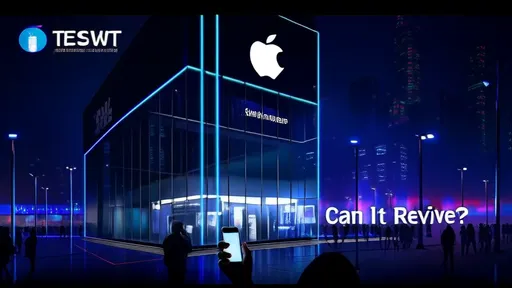
The air crackles with anticipation as the tech world turns its gaze toward Cupertino, where Apple is poised to unveil its latest innovations. This annual ritual, more than just a product launch, serves as a critical barometer for the entire consumer electronics supply chain—a sprawling, global network of manufacturers, component suppliers, and logistics firms that has endured a prolonged period of strain. The question on every analyst's and investor's mind is whether the gravitational pull of a new iPhone, a new wearable, or a surprise new category can finally catalyze a broad and sustainable recovery.
For nearly three years, the chain has been battered by a perfect storm of disruptions. The pandemic-induced lockdowns first halted production, then unleashed a wave of pent-up demand that the system, choked by shipping container shortages and port logjams, was ill-equipped to handle. Just as those knots began to loosen, geopolitical tensions and inflationary pressures tightened them anew. Inventory piled up as consumer spending, particularly on non-essential gadgets, softened under the weight of economic uncertainty. Factories that once operated at a frenetic pace were forced to scale back, casting a pall over the entire sector.
Against this bleak backdrop, an Apple event is not merely a marketing spectacle; it is a potential lifeline. The company's product cycle commands such immense volume that its ripple effects are felt from semiconductor fabrication plants in Taiwan to assembly lines in Zhengzhou. A single new design feature—a higher-resolution display, a more advanced sensor—can trigger billions of dollars in orders, breathing life into specialized component makers who have been operating in the red. The "Apple effect" is a well-documented economic phenomenon, and this year, its power is needed more than ever.
Early whispers from within the supply chain suggest a cautious optimism. Orders for certain advanced components, particularly those related to camera systems and proprietary chipsets, have seen a notable uptick in recent weeks. This is often the first concrete signal of a looming Apple launch and a precursor to broader activity. Suppliers are reportedly cautiously ramping up production capacity, though they remain wary of overextending themselves given the recent memory of order cancellations and inventory gluts. The mood is one of hope, tempered by hard-earned pragmatism.
However, the chain's recovery is no longer solely dependent on Apple's ability to dazzle consumers. The challenges are now structural and macroeconomic. Even if the new products are a resounding success, can the supply chain physically deliver? Labor shortages persist in key manufacturing regions. The cost of raw materials and shipping, while down from their peaks, remains volatile. Furthermore, the global shift towards regionalization and friend-shoring, partly a response to geopolitical risks, is forcing companies to reconfigure long-established logistics networks, a costly and complex process that will take years to fully optimize.
Another critical variable is the consumer themselves. The era of easy money and seemingly limitless discretionary spending appears to be over. In many major markets, households are grappling with higher interest rates and the rising cost of living. A smartphone, even a shiny new one from Apple, is now a more considered purchase. The upgrade cycle has lengthened considerably, and consumers demand truly compelling reasons to open their wallets. The industry is watching to see if Apple's marketing magic can once again shorten that cycle and create a "must-have" moment powerful enough to override economic hesitancy.
Beyond the immediate buzz of the launch, the long-term health of the consumer electronics supply chain hinges on its adaptation to new realities. The industry is embarking on a painful but necessary transition. Automation is being accelerated to counter labor instability. Inventory management is becoming hyper-focused on just-in-time delivery to avoid costly overstock. There is a greater emphasis on diversification—both in sourcing components and in end markets—to build resilience against future shocks. This recovery, therefore, may look different from past ones; less a dramatic V-shaped bounce and more a gradual, strategic recalibration.
In the final days before the event, the industry holds its breath. The announcements from the stage in Cupertino will set the tone for the coming quarter and potentially the entire year. A strong showing could provide the jolt of confidence needed to unlock investment, spur hiring, and get the gears of global manufacturing turning with renewed vigor. It could signal that the worst is finally over. Conversely, a muted response or products perceived as iterative could prolong the winter of caution and contraction. The stakes could not be higher. The consumer electronics supply chain is poised at a crossroads, and its direction will be significantly influenced by the light emanating from Apple's launch event.

By /Aug 28, 2025

By /Aug 28, 2025

By /Aug 29, 2025

By /Aug 28, 2025
By /Aug 28, 2025

By /Aug 29, 2025

By /Aug 29, 2025

By /Aug 28, 2025
By /Aug 28, 2025
By /Aug 28, 2025

By /Aug 29, 2025

By /Aug 28, 2025

By /Aug 28, 2025

By /Aug 29, 2025

By /Aug 28, 2025

By /Aug 28, 2025

By /Aug 28, 2025

By /Aug 29, 2025

By /Aug 28, 2025

By /Aug 28, 2025
