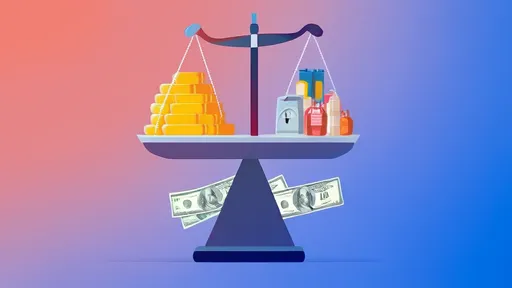
The global oil markets are currently navigating one of the most complex and volatile periods in recent history, caught in a fierce tug-of-war between shifting geopolitical landscapes and an uncertain demand outlook. The delicate process of rebalancing supply and demand, once thought to be a straightforward economic equation, has been hijacked by a potent cocktail of international tensions, policy shifts, and divergent economic recoveries across the globe. Traders, analysts, and government officials are all watching the scales, trying to predict which force will ultimately tip the balance.
On the supply side, the specter of geopolitics looms larger than it has in years. The ongoing conflict in Eastern Europe continues to cast a long shadow over energy security, particularly in Europe. Sanctions and self-imposed embargoes have permanently rerouted traditional flows of crude, creating new alliances and supply chains while severing old ones. The market has grown accustomed to a certain level of disruption from this region, but the constant threat of further escalation keeps a persistent risk premium baked into prices. Every drone strike, every diplomatic meeting, and every naval incident in critical waterways sends ripples through trading desks, highlighting the market's acute sensitivity to events far removed from the oil fields themselves.
Simultaneously, the OPEC+ alliance remains the central bank of the oil world, meticulously managing output to maintain a floor under prices. However, the cohesion of this diverse group is perpetually tested. Internal disagreements over production baselines and quota compliance occasionally flare into public view, revealing the underlying tensions between members with differing economic needs and political allegiances. Their decisions, announced after often-contentious meetings, are dissected for hints about the group's view on global demand and their tolerance for market share. The alliance's strategy is no longer just about balancing the market; it's a high-stakes game of anticipating the moves of other producers and the health of the global economy.
Meanwhile, the other side of the equation—global oil demand—presents a murkier picture. The post-pandemic rebound, which roared back with a vengeance, is showing signs of spluttering. The engine of global growth, China, is experiencing a pronounced slowdown, hampered by a property crisis and weaker-than-expected consumer spending. The once-insatiable appetite for crude in the world's largest importer is now a major source of concern. Economic data from Beijing is scrutinized as closely as inventory reports from Oklahoma, as a sustained slowdown in China could single-handedly overwhelm any supply tightness engineered by producing nations.
In the developed world, the picture is equally mixed. The United States has displayed remarkable economic resilience, but persistently high inflation and the correspondingly aggressive monetary policy response from the Federal Reserve threaten to cool economic activity and, by extension, fuel consumption. In Europe, the economic outlook remains fragile, with manufacturing activity often languishing in contraction territory. The much-heralded "revenge travel" boom appears to have peaked, suggesting jet fuel demand may have reached a near-term ceiling. The great uncertainty is whether the world is heading for a soft landing or a deeper economic contraction, a question that oil traders are desperately trying to answer.
Further complicating the demand forecast is the energy transition. The long-term trajectory is clear: a gradual shift away from fossil fuels. But the pace of this transition is erratic and politically charged. Electric vehicle adoption rates vary wildly by region, and investments in renewable energy infrastructure, while growing, have not yet been sufficient to displace hydrocarbons at a scale that significantly dents near-term oil demand. This creates a strange dichotomy where markets must price in both the immediate cyclical demand from emerging economies and the inevitable structural decline from environmental policies. This is not your grandfather's oil market anymore.
The interplay between these forces creates a market that is notoriously difficult to predict. A bullish supply shock, such as a major unplanned outage in a key producing nation, can be instantly negated by a bearish demand revision from a major economic forecasting body. Inventory data, once a reliable indicator, can be swayed by logistical bottlenecks and changing storage strategies, making it a less clear signal than in the past. The market is reacting to narratives as much as it is to barrels, with sentiment shifting on a weekly, sometimes daily, basis.
In this high-stakes environment, the only certainty is volatility. The rebalancing act is continuous and dynamic. A deficit one month can quickly flip to a surplus the next, depending on the whims of geopolitics or the release of a disappointing economic indicator. For producers, the strategy is about maximizing revenue in an uncertain environment, often by maintaining spare capacity as an insurance policy against price spikes. For consumers and consuming nations, it is about ensuring security of supply without jeopardizing economic stability. The great game—the game between geopolitics and demand—has no clear winner, only a market that hangs in the balance, waiting for the next move.

By /Aug 28, 2025

By /Aug 28, 2025

By /Aug 29, 2025

By /Aug 28, 2025
By /Aug 28, 2025
By /Aug 29, 2025

By /Aug 29, 2025

By /Aug 28, 2025
By /Aug 28, 2025

By /Aug 28, 2025

By /Aug 29, 2025

By /Aug 28, 2025
By /Aug 28, 2025

By /Aug 29, 2025

By /Aug 28, 2025
By /Aug 28, 2025

By /Aug 28, 2025

By /Aug 29, 2025

By /Aug 28, 2025
By /Aug 28, 2025
