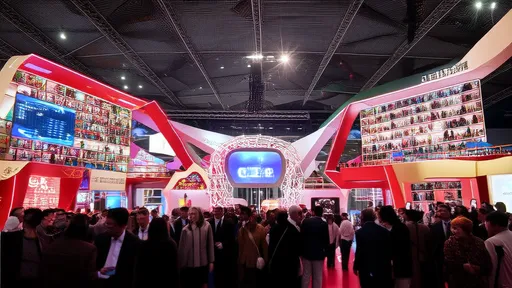
Against the backdrop of global economic uncertainties, the upcoming China International Import Expo (CIIE) emerges as a beacon of innovation and international cooperation. This year's edition promises to showcase 461 cutting-edge achievements, with two sectors particularly capturing the imagination of industry observers: low-altitude economy and humanoid robotics. These fields represent not merely technological marvels but potential paradigm shifts in how we live, work, and connect.
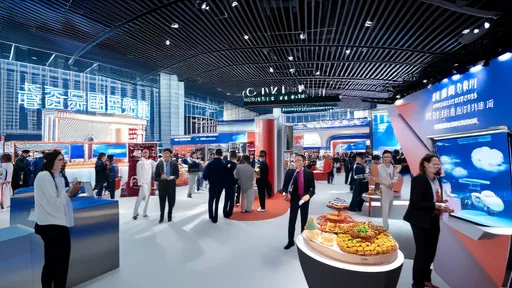
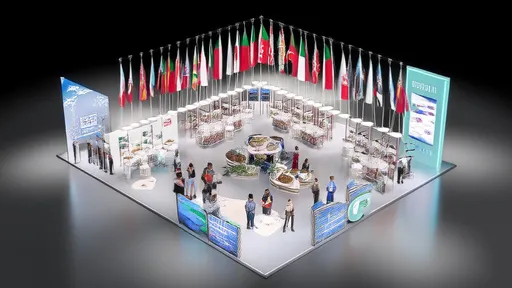
The sheer scale of participation underscores CIIE's growing significance on the global stage. Companies from over 140 countries and regions will display their latest breakthroughs, transforming the expo into a vibrant marketplace of ideas and partnerships. What makes this year particularly noteworthy is the strategic focus on technologies that blur the lines between science fiction and commercial reality. The selected 461 innovations have undergone rigorous evaluation, ensuring that visitors witness only the most promising and commercially viable advancements.
Low-altitude economy takes center stage as aviation reimagines urban mobility
The concept of low-altitude economy encompasses all aviation activities within 1,000 meters of the ground, primarily involving unmanned aerial vehicles (UAVs) and emerging electric vertical take-off and landing (eVTOL) aircraft. At CIIE, this sector will demonstrate remarkable progress beyond conventional drone applications. Multiple Chinese and international companies are preparing to unveil eVTOL prototypes designed for urban air mobility, potentially revolutionizing how we navigate congested cities.
These flying vehicles represent more than just technological achievements; they offer solutions to pressing urban challenges. Imagine skipping two-hour commutes with a 15-minute aerial journey across the city. Several exhibitors will present aircraft capable of precisely that, with some models boasting ranges exceeding 200 kilometers on a single charge. The development of these vehicles has accelerated dramatically, with many companies transitioning from concept to flight testing within remarkably short timeframes.
Supporting infrastructure forms another critical component of the low-altitude economy display. Advanced ground-based detection systems, sophisticated air traffic management solutions, and automated charging stations will demonstrate how the entire ecosystem is evolving simultaneously. One European company plans to showcase a revolutionary landing pad design that enables fully autonomous charging and maintenance, addressing one of the key operational challenges for commercial drone services.
The commercial applications extend far beyond passenger transport. Agricultural drones capable of precision spraying, delivery UAVs designed for medical supply transportation, and inspection drones equipped with advanced sensors for infrastructure monitoring will all feature prominently. The integration of artificial intelligence has enabled these systems to operate with unprecedented autonomy, making complex decisions in real-time based on environmental data.
Humanoid robotics advances signal new era of human-machine collaboration
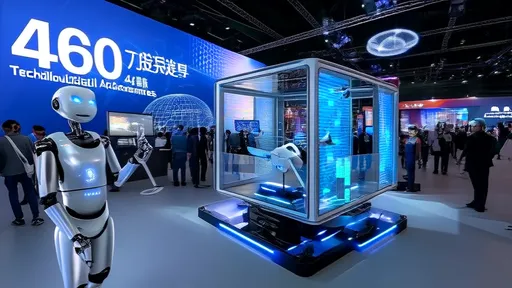
Parallel to the developments in low-altitude transportation, humanoid robotics stands poised to redefine multiple industries. This year's CIIE will feature robots with capabilities that seemed distant fantasies just a few years ago. The advancements span both hardware and software, with robots demonstrating improved dexterity, better balance, and more natural interaction capabilities.
Several leading robotics companies will present models capable of performing delicate manufacturing tasks that previously required human hands. These robots can handle everything from precision assembly to quality inspection, adapting to variations in the production process with remarkable flexibility. The improved tactile sensors allow them to manipulate fragile objects without damage, while advanced computer vision enables real-time adjustment to changing conditions.
Perhaps most impressively, the latest generation of humanoid robots exhibits significantly enhanced learning capabilities. Through demonstration and reinforcement learning, these machines can acquire new skills without extensive reprogramming. One Chinese company plans to demonstrate a robot that learned complex kitchen tasks simply by observing human chefs, then perfected its techniques through repeated practice. This represents a fundamental shift from programmed robots to learning machines.
The service sector applications appear equally transformative. Robots designed for elderly care, retail assistance, and hospitality services will demonstrate sophisticated social interaction capabilities. Natural language processing has reached a point where these machines can understand context and emotional nuance, enabling more meaningful exchanges with human users. The potential to address labor shortages in aging societies makes these developments particularly significant.
Synergistic technologies amplify impact across sectors
Beyond the headline-grabbing innovations in low-altitude economy and robotics, numerous supporting technologies will demonstrate how different sectors increasingly converge. Advanced battery technologies, particularly solid-state batteries with higher energy density and improved safety profiles, will feature prominently. These power solutions enable longer flight times for eVTOLs and extended operation for robots, addressing critical limitations of current systems.
Artificial intelligence serves as the invisible thread connecting diverse innovations. Machine learning algorithms optimize flight paths for UAVs, computer vision systems enable robots to navigate complex environments, and natural language processing creates more intuitive human-machine interfaces. The integration of AI across applications demonstrates how foundational technologies amplify the impact of specific innovations.
Connectivity forms another crucial enabler. The deployment of 5G and emerging 6G technologies provides the low-latency, high-bandwidth communication necessary for real-time control of autonomous systems. Several telecommunications companies will showcase dedicated network solutions for UAV traffic management and robotic operations, highlighting how digital infrastructure must evolve to support physical innovations.
Global collaboration drives innovation forward
The international character of CIIE facilitates crucial cross-border partnerships that accelerate technological development. Joint ventures between Chinese and European companies in the eVTOL sector, research collaborations between Asian and American universities on robotics, and technology transfers across continents all find fertile ground at the expo. This global exchange of knowledge and resources proves essential for tackling the complex challenges of developing advanced technologies.
Intellectual property protection mechanisms established specifically for CIIE give international companies confidence to showcase their latest developments. The transparent environment encourages open discussion about technological roadmaps and collaboration opportunities. Many past participants have formed lasting partnerships that extended far beyond the exhibition dates, creating innovation ecosystems that span multiple countries.
The participation of startups alongside established industry giants creates a dynamic innovation landscape. Venture capital firms and corporate investment arms actively scout for promising technologies, providing the financial fuel needed to bring concepts to market. This blending of established expertise and entrepreneurial energy generates a unique creative chemistry.
Addressing regulatory and societal considerations
As these technologies advance, parallel discussions around regulation and social acceptance gain importance. CIIE will host dedicated forums addressing airspace management for urban air mobility, safety standards for humanoid robots, and ethical guidelines for artificial intelligence. Regulators, industry representatives, and academic experts will engage in constructive dialogue to establish frameworks that enable innovation while protecting public interests.
Public perception and acceptance represent critical factors for successful technology adoption. Several exhibitors will demonstrate safety features and fail-safe mechanisms designed to build trust in their systems. Transparent communication about capabilities and limitations helps manage expectations and facilitates smoother integration of technologies into daily life.
Workforce development and retraining initiatives will also feature in discussions, addressing concerns about technological unemployment. The consensus emerging across industries emphasizes that automation typically transforms job requirements rather than eliminating roles entirely. Educational institutions and companies are developing training programs to prepare workers for collaborating with advanced technologies.
Looking toward a transformed future
The innovations displayed at CIIE offer glimpses into a future where technology seamlessly integrates into our physical environment. The convergence of low-altitude transportation, advanced robotics, and supporting technologies points toward comprehensive solutions for urban challenges, manufacturing evolution, and service delivery transformation. Rather than isolated technological marvels, we see interconnected systems that collectively redefine possibilities.
The commercial viability of these technologies has improved dramatically, with many solutions approaching cost levels that enable widespread adoption. Manufacturing scale-up, supply chain optimization, and design refinements have collectively driven down costs while improving performance. Several companies will announce production timelines and commercial deployment plans, signaling the transition from prototype to product.
As the boundaries between physical and digital continue to blur, the innovations at CIIE demonstrate how technology can enhance human capabilities rather than replace them. The focus remains on creating systems that amplify our strengths, address our limitations, and ultimately improve quality of life. The future glimpsed at this year's expo appears not as a cold, automated world, but as one where technology serves humanity with increasing sophistication and subtlety.
The 461 achievements represent more than individual breakthroughs; they collectively chart a course toward smarter cities, more efficient industries, and enhanced human experiences. As these technologies mature and converge, they promise to reshape our world in ways we are only beginning to imagine. The progress displayed at CIIE offers both inspiration and practical roadmaps for building that future.

By /Nov 4, 2025

By /Nov 4, 2025
By /Nov 4, 2025
By /Nov 4, 2025

By /Nov 4, 2025

By /Nov 4, 2025
By /Nov 4, 2025
By /Nov 4, 2025

By /Nov 4, 2025

By /Nov 4, 2025

By /Nov 4, 2025

By /Nov 4, 2025

By /Nov 4, 2025

By /Nov 4, 2025

By /Nov 4, 2025

By /Nov 4, 2025

By /Nov 4, 2025

By /Nov 4, 2025

By /Nov 4, 2025

By /Nov 4, 2025
