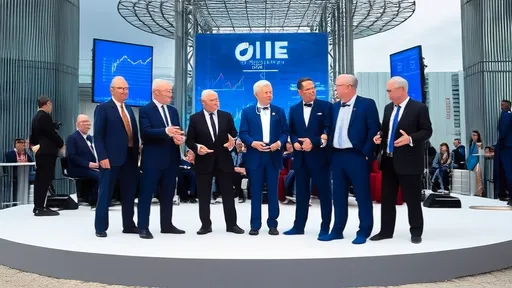
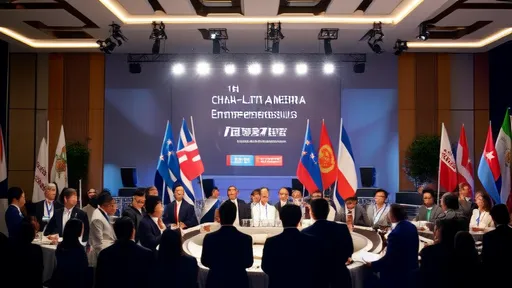
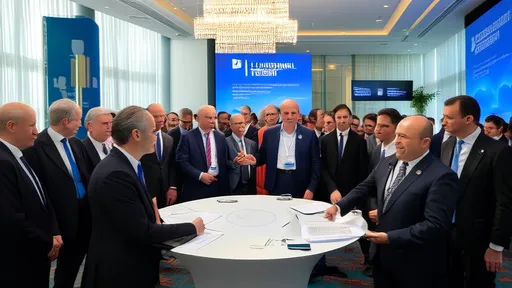
The historic city of Belgrade witnessed a momentous gathering this week as government leaders, trade ministers, and business executives from across Southeast Europe convened for the inaugural Balkan Regional Trade Summit. Against the backdrop of evolving global economic alliances and post-pandemic recovery efforts, the summit represents a watershed moment for regional economic integration.
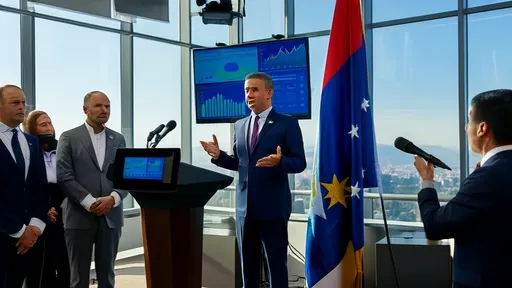
Serbian Prime Minister Ana Brnabić opened the proceedings with a powerful address emphasizing the strategic importance of the gathering. "For too long, our region has been defined by its divisions rather than its potential for collaboration," she declared to an audience of several hundred delegates. "This summit marks our collective commitment to rewriting that narrative through concrete economic partnerships that will benefit all our citizens."
The timing of this initiative reflects growing recognition among Balkan nations that collective action represents their most viable path to economic prosperity. With individual economies facing similar challenges—from infrastructure gaps to workforce development—the summit provides an unprecedented platform for coordinated solutions. The European Union's renewed commitment to enlargement has further accelerated these regional integration efforts, creating both opportunities and imperatives for harmonized trade frameworks.
Central to the summit's agenda is the proposed New Balkan Free Trade Agreement, a comprehensive framework that builds upon existing arrangements while addressing longstanding barriers to cross-border commerce. The agreement's preliminary text, circulated among delegations ahead of the summit, outlines provisions for tariff elimination, streamlined customs procedures, and mutual recognition of professional certifications across participating nations.
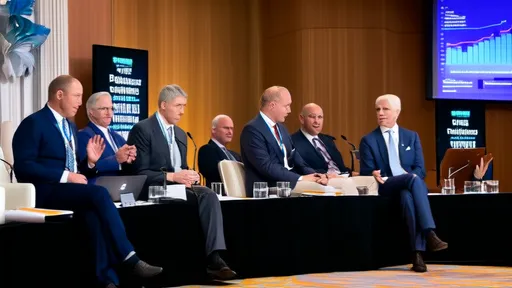
Croatian Economy Minister Davor Filipović highlighted the agreement's potential to transform regional supply chains. "Our analysis indicates that reducing non-tariff barriers alone could increase intra-regional trade by nearly forty percent within three years," he explained during a panel discussion on trade facilitation. "More importantly, it positions our region as a more attractive destination for foreign investment by creating a unified market of over eighteen million consumers."
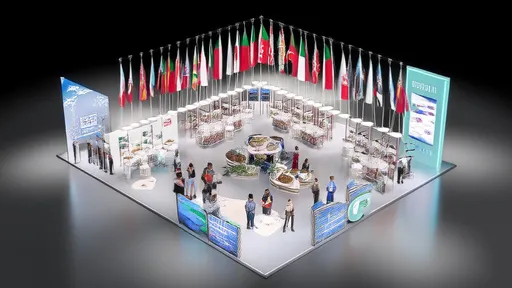
The business community's response has been notably enthusiastic, with regional chambers of commerce reporting unprecedented engagement from private sector stakeholders. Manufacturing associations particularly welcome the agreement's provisions for cumulation of origin, which would allow components sourced from multiple Balkan countries to be treated as regional content for export purposes. This represents a significant advantage for industries ranging from automotive parts to food processing that rely on cross-border production networks.
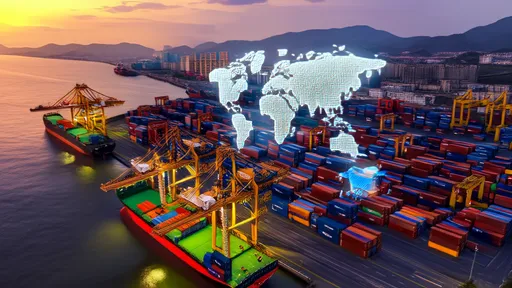
Infrastructure connectivity emerged as another critical theme throughout the first day's discussions. Despite geographical proximity, inadequate transportation links continue to impede the flow of goods across the region. Panelists repeatedly emphasized that trade liberalization must be accompanied by physical connectivity improvements to realize its full potential. The proposed Western Balkans Transport Community Treaty received substantial attention as a complementary initiative that would coordinate rail, road, and energy infrastructure projects across national boundaries.
North Macedonia's Vice President for Economic Affairs, Fatmir Bytyqi, stressed the importance of synchronizing these efforts. "We cannot speak of free trade when truck drivers waste hours at border crossings or when railway gauges change at national frontiers," he noted during a working session on logistics corridors. "The success of any trade agreement ultimately depends on the physical infrastructure that enables commerce to flow efficiently."
Digital integration similarly featured prominently in the day's deliberations. As global commerce increasingly shifts online, Balkan nations recognize the urgent need to harmonize their digital trade frameworks. Discussions focused on creating regional standards for e-commerce, cross-border data flows, and digital payment systems. The European Union's Digital Single Market initiative provides a useful template, though participants acknowledged the need to adapt these models to regional specificities.
Perhaps the most politically significant aspect of the summit has been its demonstration of regional solidarity amid ongoing global uncertainties. With international trade facing headwinds from geopolitical tensions and protectionist tendencies in some major economies, Balkan leaders appear determined to chart an alternative course based on cooperation rather than isolation. This sentiment was echoed repeatedly in both formal sessions and corridor conversations among delegates.
Montenegrin Foreign Minister Ranko Krivokapić captured this collective resolve during his intervention. "In a world increasingly fragmented by trade disputes and economic nationalism, our region has chosen integration," he asserted. "We recognize that our individual economic futures are inextricably linked, and that cooperation represents not just an opportunity but a necessity for sustainable development."
The summit's first day concluded with working groups beginning detailed negotiations on specific aspects of the proposed trade agreement. Technical committees will spend the coming days addressing complex issues including rules of origin, sanitary and phytosanitary measures, and dispute settlement mechanisms. While significant work remains, the collaborative spirit evident in initial discussions suggests substantial progress is achievable.
As delegates dispersed for evening receptions, the atmosphere was notably optimistic yet tempered by recognition of the challenges ahead. Implementation will require not just political will but significant institutional capacity building across the region. Technical assistance from international partners including the European Union and World Bank will be crucial in this regard, particularly for smaller economies with limited administrative resources.
The Balkan Regional Trade Summit continues through the week with additional sessions focused on sector-specific opportunities in agriculture, energy, tourism, and information technology. A ministerial-level closing ceremony on Friday is expected to produce a joint declaration outlining next steps toward finalizing the New Balkan Free Trade Agreement by year's end. For a region too often associated with conflict and division, this gathering represents a profound reorientation toward shared prosperity through economic integration.
By /Nov 4, 2025

By /Nov 4, 2025

By /Nov 4, 2025

By /Nov 4, 2025

By /Nov 4, 2025
By /Nov 4, 2025

By /Nov 4, 2025
By /Nov 4, 2025

By /Nov 4, 2025
By /Nov 4, 2025

By /Nov 4, 2025

By /Nov 4, 2025

By /Nov 4, 2025
By /Nov 4, 2025

By /Nov 4, 2025

By /Nov 4, 2025

By /Nov 4, 2025

By /Nov 4, 2025
By /Nov 4, 2025
By /Nov 4, 2025
