The 18th China-Latin America Entrepreneurs Summit Issues Zhengzhou Initiative" to Connect Resources Between the Two Regions

Nov 4, 2025 By

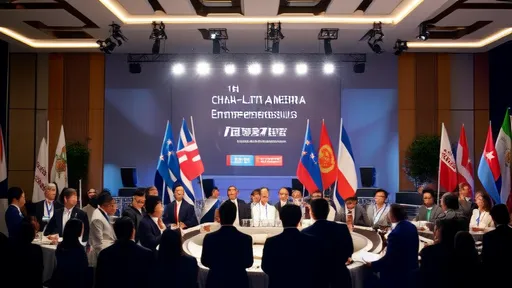
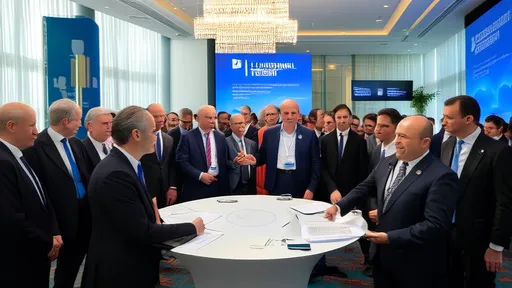
The Zhengzhou Initiative, unveiled during the 18th China-Latin America and the Caribbean (LAC) Business Summit, marks a pivotal moment in transcontinental economic collaboration. Against the backdrop of global supply chain realignments and shifting trade dynamics, this comprehensive framework establishes a roadmap for deepening ties between two regions that have demonstrated remarkable economic complementarity over the past decade. The document emerges at a critical juncture, as both Chinese and Latin American economies navigate post-pandemic recovery while confronting new challenges in the international economic landscape.


Forging New Pathways in Economic Cooperation

The initiative represents more than just another diplomatic agreement; it embodies a strategic vision for sustainable partnership. Unlike previous declarations that often remained confined to theoretical frameworks, the Zhengzhou Initiative contains concrete action plans with measurable targets. What makes this document particularly significant is its timing – coming precisely when many Latin American nations are reevaluating their economic dependencies and China is seeking to diversify its international partnerships beyond traditional markets.


Central to the initiative is the creation of specialized working groups that will focus on specific sectors where synergies between Chinese technological advancement and Latin American resource wealth are most promising. These include agricultural technology, renewable energy infrastructure, digital transformation, and sustainable mining practices. The working groups will comprise not only government representatives but also industry experts and academic researchers, ensuring that policies are grounded in practical commercial realities.


Infrastructure Development as a Cornerstone

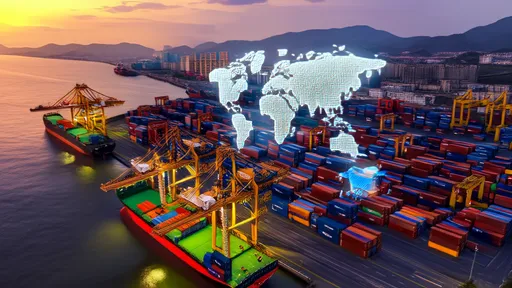
Infrastructure connectivity forms the backbone of the Zhengzhou Initiative, with particular emphasis on transportation networks, digital infrastructure, and energy systems. The document outlines plans for developing port facilities capable of handling increased maritime trade, while simultaneously addressing the critical need for internal connectivity within Latin American countries. This dual approach recognizes that efficient export corridors require robust domestic transportation networks to move goods from production centers to shipping ports.


In the digital realm, the initiative proposes collaborative projects to expand broadband access in underserved regions of Latin America, leveraging Chinese expertise in telecommunications infrastructure. This digital dimension extends beyond physical infrastructure to include cooperation in e-commerce platforms, digital payment systems, and cross-border data flows. The integration of digital and physical infrastructure represents a holistic understanding of modern economic connectivity.


Agricultural Innovation and Food Security

The agricultural sector features prominently in the cooperation framework, reflecting both regions' strategic interests. For Latin American nations, partnership with China offers access to advanced agricultural technologies and a massive consumer market. For China, collaboration ensures greater food security through diversified supply sources. The initiative specifically addresses technology transfer in areas such as precision agriculture, water management systems, and post-harvest processing facilities.


Beyond traditional agricultural trade, the document emphasizes developing integrated value chains that benefit both regions. This includes establishing joint research centers focused on tropical agriculture, creating standardized certification processes for organic and specialty products, and developing logistics solutions for perishable goods. The comprehensive approach recognizes that modern agricultural cooperation extends far beyond simple commodity exchanges.


Energy Transition and Sustainable Development

Clean energy collaboration represents one of the most forward-looking aspects of the Zhengzhou Initiative. The document outlines specific mechanisms for joint development of renewable energy projects, particularly in solar, wind, and hydropower. Latin America's abundant natural resources combined with Chinese manufacturing capacity and technological expertise create powerful synergies in this sector. The initiative also addresses the critical issue of critical minerals essential for energy transition technologies.


Sustainability measures embedded throughout the initiative reflect growing environmental consciousness in both regions. The framework includes provisions for knowledge sharing in environmental protection technologies, establishment of green standards for bilateral trade, and development of circular economy models. This environmental dimension demonstrates recognition that long-term economic partnership must be grounded in ecological responsibility.


Financial Mechanisms and Investment Flows

The initiative introduces innovative financial instruments designed to facilitate the envisioned cooperation. These include specialized funds for infrastructure projects, risk-sharing mechanisms for small and medium enterprises seeking cross-border opportunities, and currency swap arrangements to reduce dependency on third-party currencies. The financial provisions acknowledge that ambitious cooperation plans require equally ambitious funding solutions.


Investment protection agreements form another crucial component, addressing concerns about legal security that have sometimes hindered Chinese investment in Latin America. The document proposes establishing dispute resolution mechanisms specifically tailored to China-LAC commercial relationships, drawing on international best practices while respecting the legal traditions of all participating nations.


Cultural Exchange and Human Capital Development

Beyond economic dimensions, the Zhengzhou Initiative recognizes that sustainable partnership requires deeper people-to-people connections. The framework includes expanded scholarship programs for Latin American students in Chinese universities, particularly in fields relevant to the cooperation priorities. Similarly, it encourages Chinese language education in Latin America and Spanish/Portuguese language studies in China.


Professional exchange programs represent another key element, facilitating knowledge transfer in sectors prioritized by the initiative. These programs will enable managers, engineers, and technicians from both regions to gain firsthand experience in their counterparts' business environments. Such exchanges are expected to build the human networks that often prove crucial for successful international partnerships.


Implementation Framework and Monitoring Mechanisms

The practical implementation of the Zhengzhou Initiative relies on a multi-tiered governance structure involving regular ministerial meetings, working-level technical committees, and private sector advisory groups. This structure ensures that cooperation remains dynamic and responsive to evolving economic conditions. The document establishes clear timelines for various components, with some initiatives slated for immediate implementation while others follow longer-term schedules.


Monitoring and evaluation mechanisms embedded in the initiative provide for regular assessment of progress against established benchmarks. These include economic indicators tracking trade growth, investment flows, and job creation, as well as qualitative assessments of partnership quality. The evaluation framework allows for mid-course corrections based on practical experience gained during implementation.


Regional Integration and Global Context

The Zhengzhou Initiative consciously aligns with existing regional integration efforts in Latin America, seeking complementarity rather than competition with established frameworks like the Pacific Alliance and MERCOSUR. This approach recognizes the diversity within Latin America and avoids imposing a one-size-fits-all model of cooperation. The document explicitly acknowledges the importance of respecting each country's development priorities and political processes.


In the broader global context, the initiative represents a significant step in South-South cooperation at a time of considerable international uncertainty. By demonstrating that regions can develop mutually beneficial economic partnerships based on equality and shared interests, the China-LAC collaboration model offers valuable insights for other developing regions seeking to enhance their economic sovereignty while engaging with global markets.


The Zhengzhou Initiative ultimately represents more than just a blueprint for economic cooperation; it signals the maturation of China-LAC relations from simple buyer-seller relationships to comprehensive strategic partnership. As implementation progresses, the success of this ambitious framework will depend not only on governmental commitment but equally on the ability of businesses, educational institutions, and civil society organizations to translate its vision into tangible outcomes that benefit peoples across both regions.


Recommend Posts
Business

Eight Nobel Laureates to Attend CIIE Hongqiao Forum, Discussing Open Cooperation

By /Nov 4, 2025

The upcoming China International Import Expo (CIIE) is set to host an unprecedented gathering of intellectual brilliance as eight Nobel laureates prepare to grace the Hongqiao Forum, creating what organizers are calling a "historic convergence of global minds." This distinguished assembly represents one of the most significant concentrations of Nobel Prize winners ever to convene at a single trade event, signaling the forum's growing stature in addressing global challenges through international cooperation.
Business

112 Enterprises from Shandong, China Showcase at Vietnam Autumn Expo to Promote Shandong Premium" Brand

By /Nov 4, 2025

Shandong enterprises made a powerful statement at the Vietnam Autumn Expo this year, with 112 companies showcasing the province's manufacturing excellence under the unified banner of "Shandong Premium Products." The delegation, one of the largest provincial contingents at the event, transformed a significant section of the exhibition hall into a vibrant showcase of Chinese industrial and agricultural prowess. For decades, Shandong has been a bedrock of China's economic engine, and this strategic, collective branding effort marks a significant evolution from individual corporate outreach to a cohesive regional identity on the global stage.
Business

CIIE Boosts Belt and Road" Cooperation, with a Surge in Exhibitor Numbers from 123 Participating Countries

By /Nov 4, 2025

The sixth China International Import Expo has emerged as a powerful catalyst for advancing Belt and Road cooperation, with exhibition participation from 123 partner countries surging to unprecedented levels. This remarkable growth demonstrates how the world's first national-level import-themed exhibition has become a vital platform for economic globalization and shared development.
Business

Sharing China's Big Market: CIIE Innovates to Create Export to China" Brand

By /Nov 4, 2025

Against the backdrop of global economic uncertainty, the China International Import Expo (CIIE) has emerged as a transformative platform that redefines international trade dynamics. Now in its sixth edition, the world's first import-themed national-level expo has evolved beyond its original mandate of importing foreign goods into China, strategically positioning itself as the definitive gateway for global businesses seeking access to China's vast consumer market.
Business

Financial Street Forum Annual Conference Introduces First Overseas Sub-venue, with Active Participation from UAE, Frankfurt, and Other Locations

By /Nov 4, 2025

For the first time in its history, the Financial Street Forum Annual Conference has expanded its reach beyond China's borders, establishing international venues in global financial hubs including the United Arab Emirates and Frankfurt. This strategic move marks a significant evolution for the prestigious forum, traditionally a domestic powerhouse for financial dialogue, signaling its ambition to foster a more interconnected and globalized financial ecosystem. The enthusiastic participation from these key international centers underscores a growing, mutual interest in bridging Eastern and Western financial markets and policy frameworks.
Business

Financial Street Forum Annual Meeting Focuses on Private Economy, Discussing How Capital Can Irrigate the Hotbed of Science and Innovation

By /Nov 4, 2025

Against the backdrop of global economic uncertainty, the Financial Street Forum Annual Conference has drawn widespread attention for its focus on revitalizing China's private economy and exploring how capital can effectively nurture the fertile ground of technological innovation. The forum, held in Beijing's prestigious financial district, brought together policymakers, industry leaders, and financial experts to discuss the crucial relationship between private enterprises and technological advancement.
Business

461 Cutting-Edge Achievements to Showcase at CIIE, Low-Altitude Economy and Humanoid Robots Draw Attention

By /Nov 4, 2025

Against the backdrop of global economic uncertainties, the upcoming China International Import Expo (CIIE) emerges as a beacon of innovation and international cooperation. This year's edition promises to showcase 461 cutting-edge achievements, with two sectors particularly capturing the imagination of industry observers: low-altitude economy and humanoid robotics. These fields represent not merely technological marvels but potential paradigm shifts in how we live, work, and connect.
Business

Expanding the Africa Pavilion at CIIE to Support Least Developed Countries in Sharing Market Opportunities in China

By /Nov 4, 2025

The sprawling exhibition halls of the National Exhibition and Convention Center in Shanghai are set to witness a significant geographical shift this year. The China International Import Expo (CIIE), a cornerstone of China's commitment to opening its markets, is dramatically expanding its dedicated section for African products. This strategic move goes beyond mere square footage; it represents a concerted effort to dismantle trade barriers and foster a more inclusive global economic dialogue. By amplifying the platform for nations often marginalized in international trade, the CIIE is sending a powerful message about shared prosperity and the untapped potential residing within the world's least developed countries (LDCs).
Business

Shanghai Ensures Top-notch Services for CIIE, Enhances Exhibitor Experience with Various Facilitation Measures

By /Nov 4, 2025

Shanghai has once again demonstrated its world-class organizational capabilities by implementing a comprehensive suite of services and convenience measures for the China International Import Expo (CIIE), creating an unparalleled exhibition experience for global participants. The city's meticulous preparations reflect its commitment to facilitating international trade and strengthening economic cooperation through seamless event execution.
Business

The 18th China-Latin America Entrepreneurs Summit Issues Zhengzhou Initiative" to Connect Resources Between the Two Regions

By /Nov 4, 2025

The Zhengzhou Initiative, unveiled during the 18th China-Latin America and the Caribbean (LAC) Business Summit, marks a pivotal moment in transcontinental economic collaboration. Against the backdrop of global supply chain realignments and shifting trade dynamics, this comprehensive framework establishes a roadmap for deepening ties between two regions that have demonstrated remarkable economic complementarity over the past decade. The document emerges at a critical juncture, as both Chinese and Latin American economies navigate post-pandemic recovery while confronting new challenges in the international economic landscape.
Business

AI Governance and Doing Good: A Focus on the Transformation of the Financial Ecosystem in the Age of Artificial Intelligence"

By /Nov 4, 2025

The financial world stands at a critical juncture, where the shimmering promise of artificial intelligence meets the sobering responsibility of governance. Across boardrooms, regulatory bodies, and academic institutions, a profound conversation is unfolding, centering not merely on how AI can optimize profits, but on how it can be steered toward a future that is equitable, stable, and fundamentally humane. The era of viewing AI as a simple tool for algorithmic trading or customer service chatbots is over; it has evolved into the central nervous system of a new financial ecosystem, and its governance has consequently become the paramount focus for all stakeholders.
Business

New Zealand Sends Largest Trade Delegation in Five Years to Deeply Engage in Vietnam's Autumn Expo

By /Nov 4, 2025

New Zealand has dispatched its largest trade delegation to Vietnam in five years, marking a significant milestone in the bilateral economic relationship between the two Asia-Pacific nations. The delegation, comprising over 85 businesses and sector representatives, arrived in Hanoi with substantial ambitions to deepen trade connections and explore emerging opportunities across multiple industries. This strategic move comes at a time when global supply chains are undergoing realignment and regional economic partnerships are gaining increased importance.
Business

2025 Financial Street Forum Concludes, Global Finance Living Room" Resounds with a Strong Note of Open Cooperation

By /Nov 4, 2025

The grand hall of Beijing's Financial Street resonated with a renewed sense of global purpose as the 2025 Financial Street Forum Annual Conference drew to a close. Against a backdrop of complex geopolitical and economic crosscurrents, the three-day event transformed the Chinese capital into a dynamic global financial "living room," a neutral ground where the dominant theme was not competition, but the urgent necessity of collaboration.
Business

Bosnia and Herzegovina Advocates for New Markets and Calls for New Regional Free Trade Agreements

By /Nov 4, 2025

The government of Republika Srpska has announced a comprehensive economic initiative aimed at diversifying its trade partnerships through new regional free trade agreements. This strategic move comes as the entity seeks to reduce economic dependencies and create sustainable growth pathways in an increasingly volatile global market.
Business

HSBC Increases Stake in China's Joint Venture Securities Firm in Response to China's Financial Opening Policy

By /Nov 4, 2025

In a move that signals deepening confidence in China's financial reforms, HSBC Holdings plc has significantly increased its stake in its mainland securities joint venture. The banking giant's decision to raise its ownership in HSBC Qianhai Securities from 51% to 90% represents one of the most substantial commitments by a foreign financial institution since China began accelerating the opening of its $54 trillion financial sector.
Business

Vietnamese Autumn Expo Signs Over 100 Cooperation MOUs, Building a Substantial Trade Platform

By /Nov 4, 2025

HANOI - The Vietnam Autumn Expo concluded last week with remarkable outcomes, witnessing the signing of over one hundred memoranda of understanding between international and domestic enterprises, marking a significant leap forward in establishing Vietnam as a substantial trade and commerce hub in Southeast Asia.
Business

China-Latin America Entrepreneurs Summit Opens in Zhengzhou, Boosting Cooperation in New Energy Vehicles and Other Fields

By /Nov 4, 2025

The Zhengzhou International Convention Center buzzed with an electric energy that seemed to mirror the very topic dominating the conversations within its halls. The 17th China-LAC Business Summit, a cornerstone of economic dialogue between the world's second-largest economy and the resource-rich Latin American and Caribbean region, officially opened its doors, with a clear and powerful current running through the proceedings: the accelerated drive towards collaboration in new energy vehicles (NEVs) and the broader green technology sector. The air was thick with a sense of pivotal opportunity, a collective understanding that the global energy transition is not just an environmental imperative but an unprecedented economic opening.
Business

Vietnamese Autumn Expo Becomes a New Gathering Place for Global Enterprises, 34 Countries and 3000 Booths Promote Cooperation

By /Nov 4, 2025

The autumn breeze in Hanoi carries more than the scent of lotus flowers these days—it brings the palpable energy of global commerce as the Vietnam Autumn Expo emerges as the newest nexus for international business collaboration. With participation from 34 countries and over 3,000 exhibition spaces, this year's event has transformed from a regional trade show into a truly global marketplace where East meets West, tradition shakes hands with innovation, and business partnerships blossom across continents.
Business

Inaugural Balkan Regional Trade Summit Opens, Focusing on Regional Cooperation and New Free Trade Agreements

By /Nov 4, 2025

The historic city of Belgrade witnessed a momentous gathering this week as government leaders, trade ministers, and business executives from across Southeast Europe convened for the inaugural Balkan Regional Trade Summit. Against the backdrop of evolving global economic alliances and post-pandemic recovery efforts, the summit represents a watershed moment for regional economic integration.
Business

Henan's Economic Ties with Latin America Strengthen, Bilateral Trade Grows Steadily in the First Three Quarters

By /Nov 4, 2025

Against the backdrop of global economic uncertainty, the trade relationship between Henan Province and Latin America has demonstrated remarkable resilience and vitality. The latest customs data reveals a consistent upward trajectory in bilateral trade volume during the first three quarters of this year, defying broader market trends and establishing a new paradigm for South-South cooperation.